
Table of Contents
- Introduction: The uncomfortable truth most creators don’t want to hear
- The Illusion of Random Reach
- False Spikes vs Structural Growth
- Structural Chaos - Hidden Leaks
- Why Experimentation Feels Like Productivity
- The Algorithm Scales Predictability, Not Creativity
- 5 Signs Your Growth Is Structurally Unstable
- You Don’t Have a Growth Problem. You Have a Stability Problem.
- Conclusion
Introduction: The Uncomfortable Truth Most Creators Don’t Want to Hear
If your Fansly views fluctuate every week…
Іf one post “takes off” and the next one collapses…
Іf your income rises and falls without a clear reason…
It’s not the algorithm.
And it’s not bad luck.
It’s structural instability.
Most creators believe their reach is random.
“Today it showed.”
“Tomorrow it didn’t perform.”
“The algorithm changed again.”

But the truth is simpler - and less comfortable: unstable growth is almost always the result of structural chaos. And that chaos slowly drains your earning potential.
The Illusion of Random Reach
When numbers fluctuate, the brain looks for an external explanation. The algorithm becomes the perfect target.
It feels easier to say the platform “didn’t show” your content.
It’s harder to admit that your content system isn’t sending predictable signals.
The algorithm doesn’t operate on emotion. It doesn’t “like” or “ignore.” It scales what looks stable and repeatable.
When posting is inconsistent, positioning shifts, and your audience constantly changes, the signal becomes chaotic. And chaos does not scale.
Reach doesn’t drop without reason. It reacts to structure - or the lack of it.
False Spikes vs Structural Growth
A single viral post can create a spike in subscribers. It feels great. It feels like momentum.
But if a week later the numbers fall again - that wasn’t growth. It was a spike.
Spikes:
- bring random audiences
- generate short-term engagement
- fail to build long-term retention
Structural growth looks less dramatic. It doesn’t jump. It accumulates.
If your income depends on occasional “lucky” posts, that’s not a system. That’s dependency on volatility.
Structural Chaos - Hidden Leaks
Most structural problems aren’t visible.
Instability often hides in details:
- tags change without logic
- positioning drifts
- posting rhythm breaks
- testing happens without tracking results
From the outside, it looks like productivity.
Inside, it’s the absence of stable architecture.
You can work hard, post regularly, test new formats - but without a system, every move simply amplifies chaos.
Why Experimentation Feels Like Productivity
“I’m testing.”
“I’m optimizing.”
“I’m adapting.”
It sounds smart.
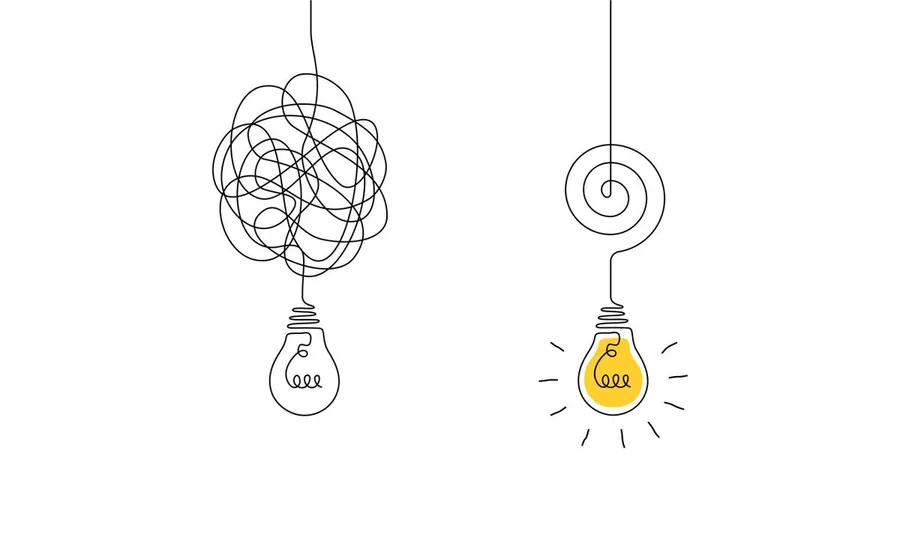
But if your strategy changes every week, the algorithm cannot build a predictive model of your behavior. And without predictability, there is no scaling.
The paradox is that constant experimentation can mask instability. It creates the illusion of control while eroding structural clarity.
Activity ≠ stability.
Effort ≠ system.
The Algorithm Scales Predictability, Not Creativity
Platforms are optimized around behavior.
If your audience consistently:
- engages
- purchases
- reaches second billing
- the signal strengthens.
If audiences arrive in waves, purchase inconsistently, and disappear after the first cycle, the signal weakens.
The algorithm doesn’t reward beautiful content. It rewards predictable outcomes.
And predictability is impossible without structure.
5 Signs Your Growth Is Structurally Unstable
- Weekly reach swings without clear explanation
If reach sharply rises and falls without controlled changes, your structure lacks stability. A system produces predictable fluctuations, not chaos. - Viral spikes followed by drop-offs
If momentum collapses after a “breakout” post, you gained noise - not growth. Spikes without retention don’t build systems. - Income fluctuates but retention doesn’t improve
If revenue depends on isolated weeks or posts rather than stable rebills, your foundation is weak. - Constant shifts in format or niche
Frequent directional changes prevent the algorithm from identifying consistent patterns. No pattern means no scaling. - No repeatable results
If you cannot clearly define what you repeat to generate outcomes, you don’t have a system - you have randomness.
If you recognize yourself in at least two of these signs, the issue isn’t the algorithm. It’s structural instability.
You Don’t Have a Growth Problem. You Have a Stability Problem.
Most creators believe they need more traffic.
What they actually need is a stronger foundation.
A growth problem sounds like:
“I need more views.”
A stability problem sounds like:
“My views aren’t predictable.”
Unstable reach leads to unstable income.
Unstable income prevents scaling.
Until structure is stabilized, every new strategy becomes just another experiment inside chaos.
Conclusion
Your Fansly reach is not random.
It reflects the architecture of your system.
When structure is unstable, the platform cannot scale your account. When signals are inconsistent, predictability drops. And when predictability drops, income follows.
Most creators don’t lack ideas or effort.
They lack structural control.
As long as you believe the problem is the algorithm, you look outward for answers.
When you begin analyzing structure, control returns.
And control is what separates chaotic growth from sustainable scaling.